

By Charles Ssendagire Nsibirwa
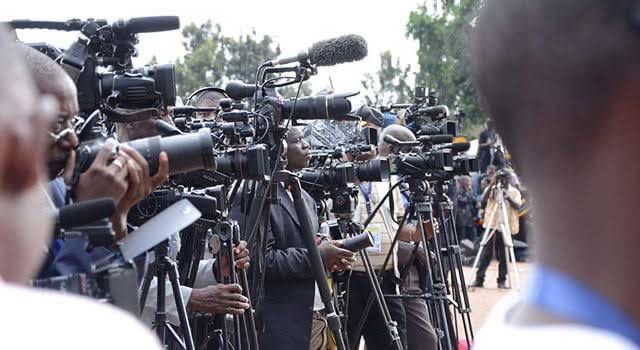
On the afternoon of February 26th, 2025, journalist Ibrahim Miracle walked into Kawempe North with his camera slung across his shoulder. His assignment was straightforward: cover the nomination of candidates for a by-election. By evening, he was in hospital, his face crushed, his eye shattered.
Doctors are still unsure if he will ever see again.
His crime? Doing his job
Uganda’s elections have long been fraught with tension, but every cycle seems to grow more hostile toward the media. The Kawempe North by-election has now entered that grim history not for its politics, but for the brutality meted out against journalists.
The pattern is unmistakable: the closer we draw to 2026, the more dangerous the work of journalism becomes.
“His eye was shattered, and bones around his face were broken,” Opposition Leader Joel Ssenyonyi told Parliament the day after Miracle’s assault.
A democracy in denial
Parliament’s condemnation was loud. Deputy Speaker Thomas Tayebwa admitted such violence stains government’s credibility. Yet weeks later, no one has been prosecuted. Not a single officer has been named.
This silence is not neutral. It is complicity. It tells perpetrators that they can brutalize journalists without consequence. It tells reporters that their safety is a footnote, expendable in the name of “order.”
Impunity is how democracies decay. Not all at once, but piece by piece, as those in power chip away at the institutions meant to safeguard truth.
The shrinking space for truth
The assault on Miracle is part of a wider climate of repression.
President Museveni’s son, Gen. Muhoozi Kainerugaba who is also the chief of defence forces, has openly threatened opponents, signaling a political environment where intimidation substitutes persuasion.
Opposition leader Robert Kyagulanyi aka Bobi Wine has already warned of a “bloody” election, recalling the violence of 2021 where dozens of Ugandans were killed and journalists attacked.
When you connect these dots, the picture becomes clear: as 2026 approaches, Uganda is not preparing for a contest of ideas, but for a contest of force.
Why press freedom matters to you
For ordinary Ugandans, press freedom may seem distant something only journalists complain about. But in truth, it is the frontline of every citizen’s right to know, to choose, and to decide.
If journalists cannot freely report from polling stations, tally centers, or campaign grounds, then the public is left blind. Citizens cannot trust what they see or hear. And in that silence, manipulation thrives.
The Uganda Journalists Association has already warned that unless safety is guaranteed, journalists may boycott coverage of the 2026 elections. Imagine that: a general election with no witnesses, no independent reporting, no accountability. An election narrated only by those in power.
That is not democracy. That is darkness.
“When journalists are silenced, citizens are betrayed.”
The human cost of silence
Behind every statistic is a life. A young man like Miracle, who may never see his children’s faces clearly again.
These are not “collateral damages.” They are reminders that truth has a human cost in Uganda and that those willing to pay it are being left unprotected.
What must change
Uganda stands at a crossroads. The choice is not abstract; it is urgent and concrete.
Prosecutions must happen. Not investigations that gather dust, but real prosecutions of those who brutalize journalists.
Security agencies must be reined in. Their loyalty should be to the Constitution, not to partisan interests.
The Electoral Commission must act. It cannot remain silent. It must guarantee media access, protection, and fairness.
Citizens must demand accountability. Silence is not safety; silence is surrender.
The international community too must not look away. Press freedom is not merely a local issue ,it is a litmus test of democracy, and Uganda is failing that test
The line in the sand
The shattered eye of Ibrahim Miracle is not just a personal tragedy. It is a national mirror. It reflects our indifference, our impunity, and our willingness to let violence become normal.
But it can also be a turning point, if we let it.
Uganda can choose a different path. One where journalists are protected, truth is respected, and elections are more than rituals of power. Or we can allow ourselves to slide deeper into the dark days ahead.
The choice is ours, but the time to act is now.
Because in the end, it is not just Miracle’s vision at stake. It is Uganda’s.